
Contents
Quick Answer: Why Does Depression Make Your Room Messy?Why Depression Makes Cleaning Feel ImpossibleWhy a Messy Room Can Make Depression Feel WorseThe 10-Minute Reset (Not Deep Cleaning)The “One Surface Rule” (If 10 Minutes Is Too Much)What to Do After the Reset (So It Doesn’t Collapse Again)When “Where Do I Start?” Feels ImpossibleFAQ: Cleaning When You’re DepressedClosing: A Reset Is Not a Personality TestIf your room is messy and you feel ashamed about it, I want you to hear this first:
You’re not lazy. You’re likely overwhelmed.
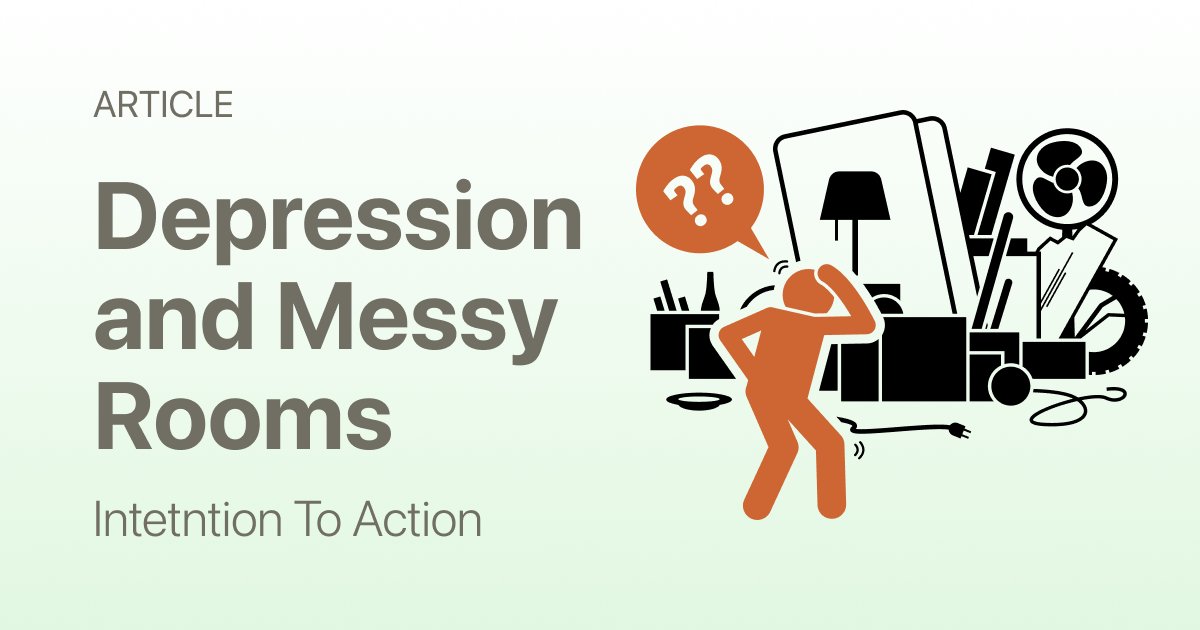
Depression and messy rooms often show up together—not because you “don’t care,”
but because depression can make basic tasks feel huge.
And then the mess makes you feel worse.
And then you have even less energy to clean.
It’s a loop.
Let’s break it—gently, and without perfection.
Quick Answer: Why Does Depression Make Your Room Messy?
A messy room during depression usually happens because depression affects:
-
energy (everything feels heavy)
-
task initiation (starting feels impossible)
-
decision-making (“Where do I begin?” becomes overwhelming)
A helpful goal is not “deep cleaning.”
It’s a 10-minute reset that reduces visual stress and creates one small win:
✅ trash → dishes → clothes pile → one surface
Stop after 10 minutes. That’s the system.
Why Depression Makes Cleaning Feel Impossible
If you’ve ever thought, “I should just clean my room,” but couldn’t move—
that’s not a character flaw.
It’s depression doing what depression does.
Here are the most common reasons cleaning gets harder when you’re depressed:
1) Low energy (movement feels heavy)
Even standing up can feel like too much.
So “clean the room” becomes a task your body can’t access.
2) Starting is the hardest part
Many people don’t struggle with cleaning once they begin.
They struggle with starting.
Depression often makes the first step feel invisible.
3) Too many micro-decisions (decision overload)
Cleaning sounds simple… until your brain starts asking:
-
Where do I begin?
-
What counts as “clean enough”?
-
Should I do laundry first or trash first?
-
What if I can’t finish?
That mental noise is exhausting.
And it’s one reason messy rooms can happen even when you want change.
Why a Messy Room Can Make Depression Feel Worse
A messy room doesn’t cause depression—but it can amplify the weight of it.
Even if you don’t notice consciously, clutter can increase:
-
visual stress
-
guilt and shame
-
overwhelm
-
avoidance (“I don’t want to look at it”)
-
the feeling of being stuck
So the goal isn’t turning your room into a Pinterest space.
The goal is simpler:
✅ create a small pocket of control
The 10-Minute Reset (Not Deep Cleaning)
This is a reset designed for depressed days.
Set a timer for 10 minutes and only do this:
✅ Step 1: Trash (2 minutes)
Throw away visible trash only.
No sorting. No perfection.
✅ Step 2: Dishes / cups (2 minutes)
Collect them into one spot.
(You don’t even have to wash them yet.)
✅ Step 3: Clothes pile (3 minutes)
Not laundry. Just one pile.
The goal is “less chaos,” not completion.
✅ Step 4: One surface (3 minutes)
Clear one surface:
-
bedside table
-
desk corner
-
the corner of your bed
-
one chair
That’s it.
Stop after 10 minutes. Seriously—stop.
You’re not creating a new standard.
You’re creating a win your brain can trust.
The “One Surface Rule” (If 10 Minutes Is Too Much)
If 10 minutes feels impossible, do one surface only.
One clear surface can make your brain feel like:
“Okay. I can breathe again.”
That matters more than finishing the room.
What to Do After the Reset (So It Doesn’t Collapse Again)
You don’t need a big plan.
Just one “hold the progress” move.
Pick one:
-
take the trash out
-
put the clothes pile in a basket
-
stack papers into one corner
-
open a window for 30 seconds
Even one extra step helps the reset last longer.
When “Where Do I Start?” Feels Impossible
One of the hardest parts of cleaning with depression is decision fatigue:
-
“Where do I start?”
-
“How long will this take?”
-
“What should I do next?”
A step-based timer tool like Routinery can help by guiding the reset one step at a time, like:
-
trash (2 min)
-
dishes (2 min)
-
clothes pile (3 min)
-
one surface (3 min)
So you don’t have to think. You just follow the steps.
And if you only have 3 minutes, you can shorten the routine on the spot—
because flexibility matters more than discipline on depressed days.
FAQ: Cleaning When You’re Depressed
Is it normal to feel shame about a messy room?
Yes. But shame doesn’t clean rooms—it freezes people. A messy room is often a sign you’re overwhelmed, not a sign you’re failing.
What if I only clean for 2 minutes?
That still counts. On depressed days, the goal is not “finish.” The goal is “reduce stress slightly and create traction.”
What’s the easiest place to start?
Trash is usually the easiest first step because it’s fast and obvious. If that’s too hard, start with one surface.
Closing: A Reset Is Not a Personality Test
Your room isn’t proof of your worth.
It’s just a reflection of your current capacity.
A 10-minute reset won’t fix everything,
but it can give you one thing depression often steals:
a little control.
CTA: Start a 10-minute reset routine in Routinery.
Disclaimer
This article is for informational purposes only and is not a substitute for professional medical advice, diagnosis, or treatment. If you’re concerned about your symptoms, consider speaking with a qualified mental health professional.
Turn this into a daily routine with Routinery.
Step-by-step timers and cues that make routines stick.
Download Routinery — Try It Free for 7 Days →